

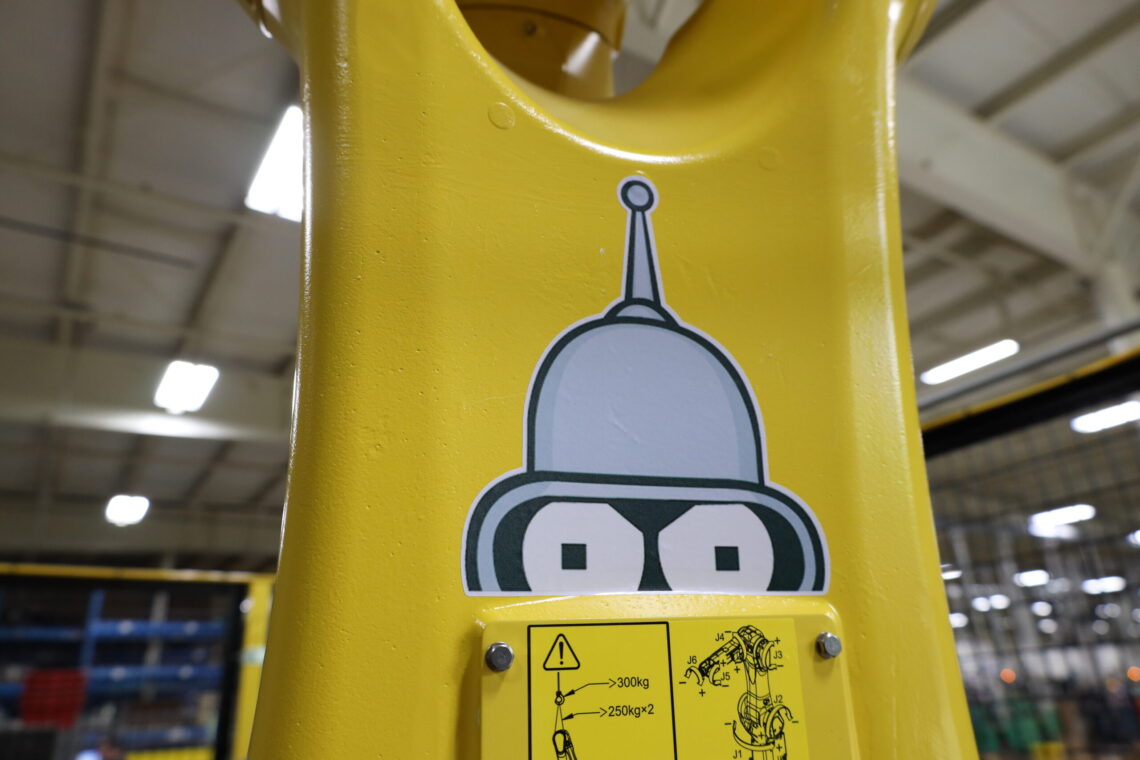
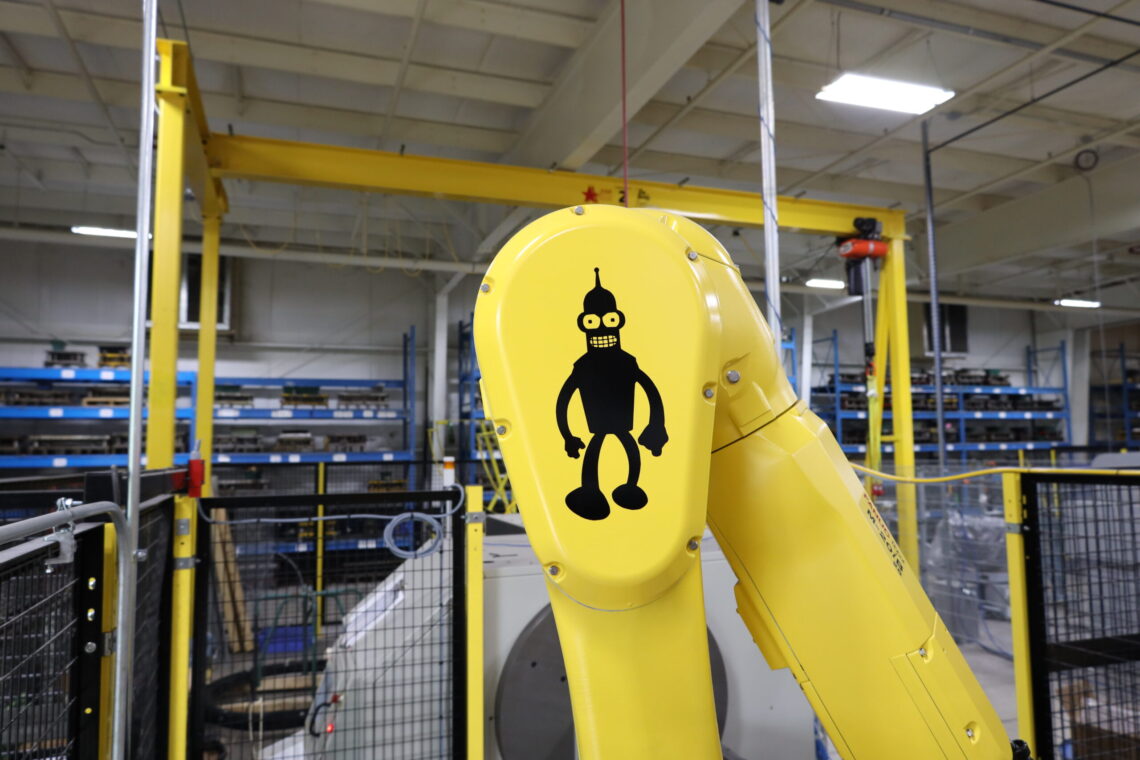
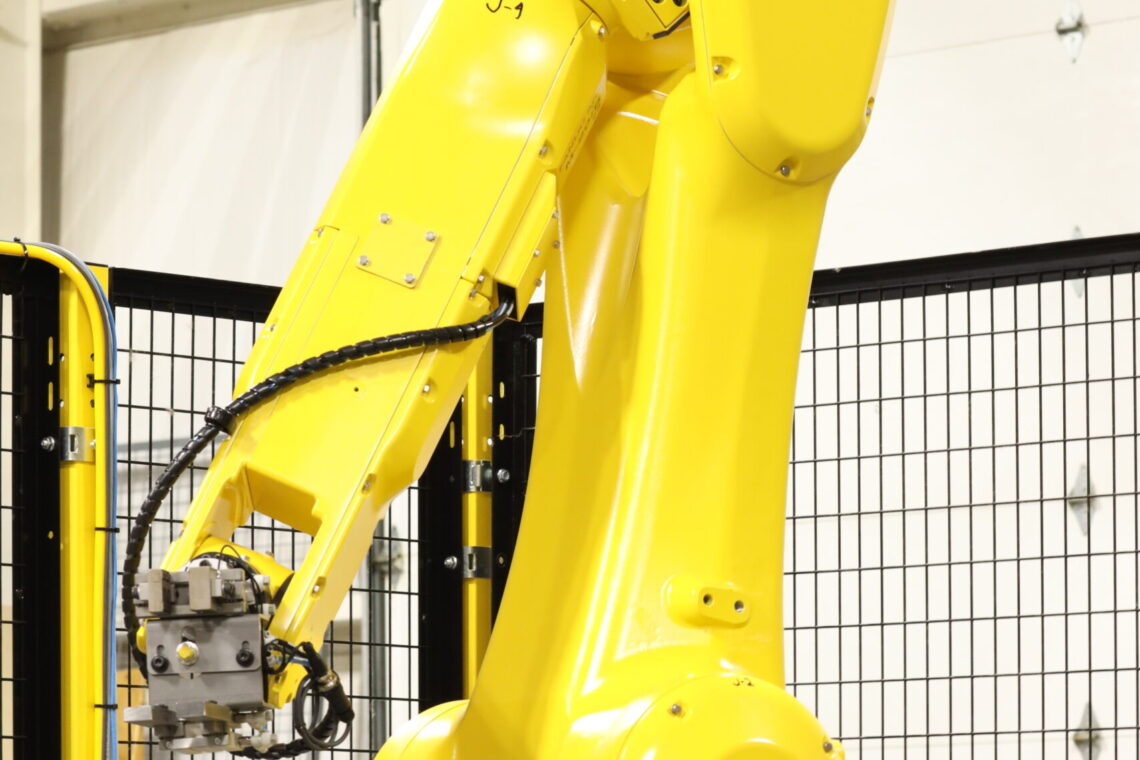
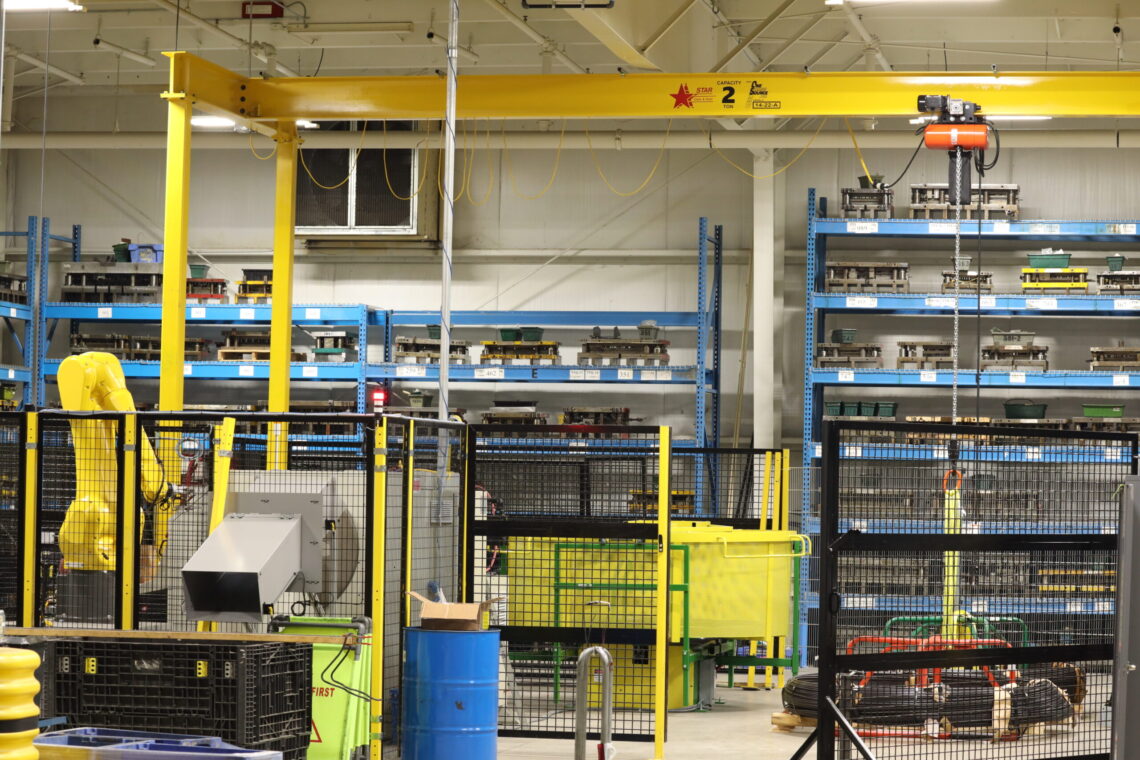
Meet Bender, the Fanuc M20 robot working with our Aim Machine!
It was a combination of customer requests and our vision to expand our product line that convinced us to add larger wire form capabilities. To be honest, we did have hesitation due to the pandemic and unknowns about the future of manufacturing. However, at APEX we have always tried to prepare for the future, be proactive, and adjust. It’s not in our character to sit back and observe as others grow and change. In addition, adding new wire form capabilities would allow us to provide additional solutions for current customers, and to new customers in new industries. So, the decision was clear, expanding our capabilities was the right next move. And today, we’re excited to introduce Bender! The new, bright yellow, Fanuc M20 robot who assists the new AIM machine at Apex!
The Backstory
Previously, we were running over 60 torsion machines and multislide coilers to make various sizes of wire springs. But there were a handful of parts that we couldn’t make. Limitations included large wire forms with configurations that were too big for the current machines. So, after a lot of research and supplier visits we made a decision. We settled on a large AIM machine along with a variety of necessary accessories; one being Bender the robot. Because this is the first robot integration at Apex we needed several employees to get robotics training. Now, we are up and running!
How it Works
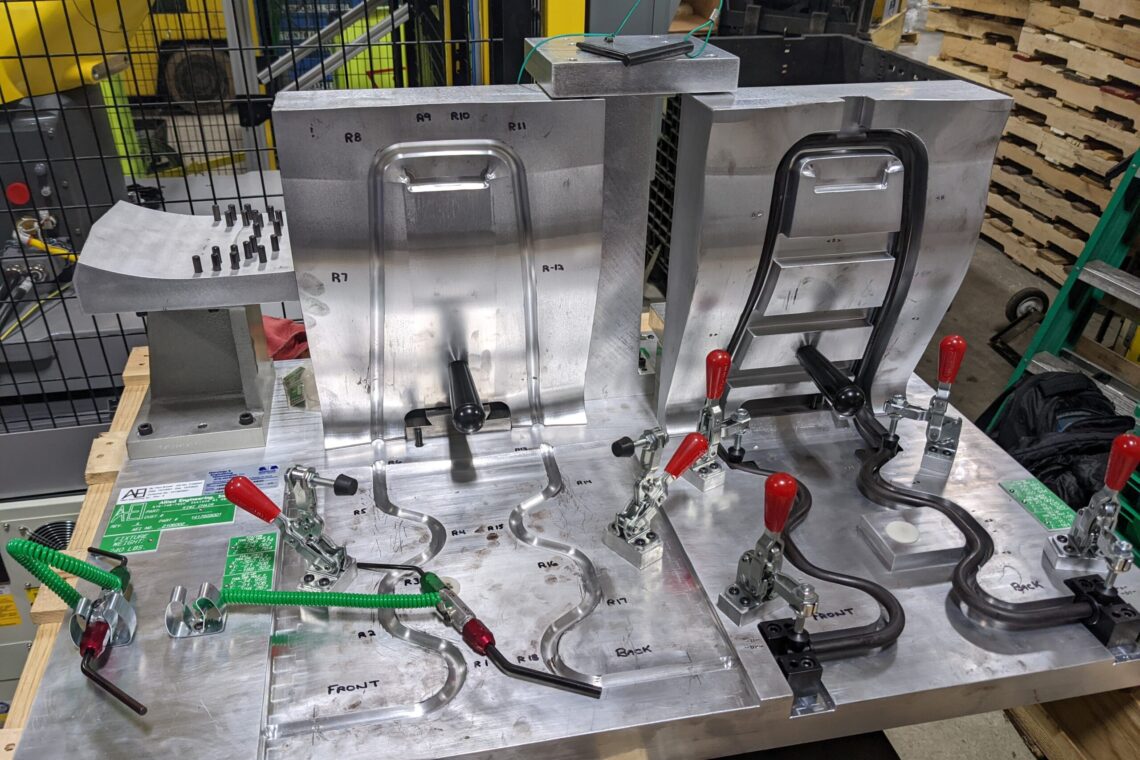
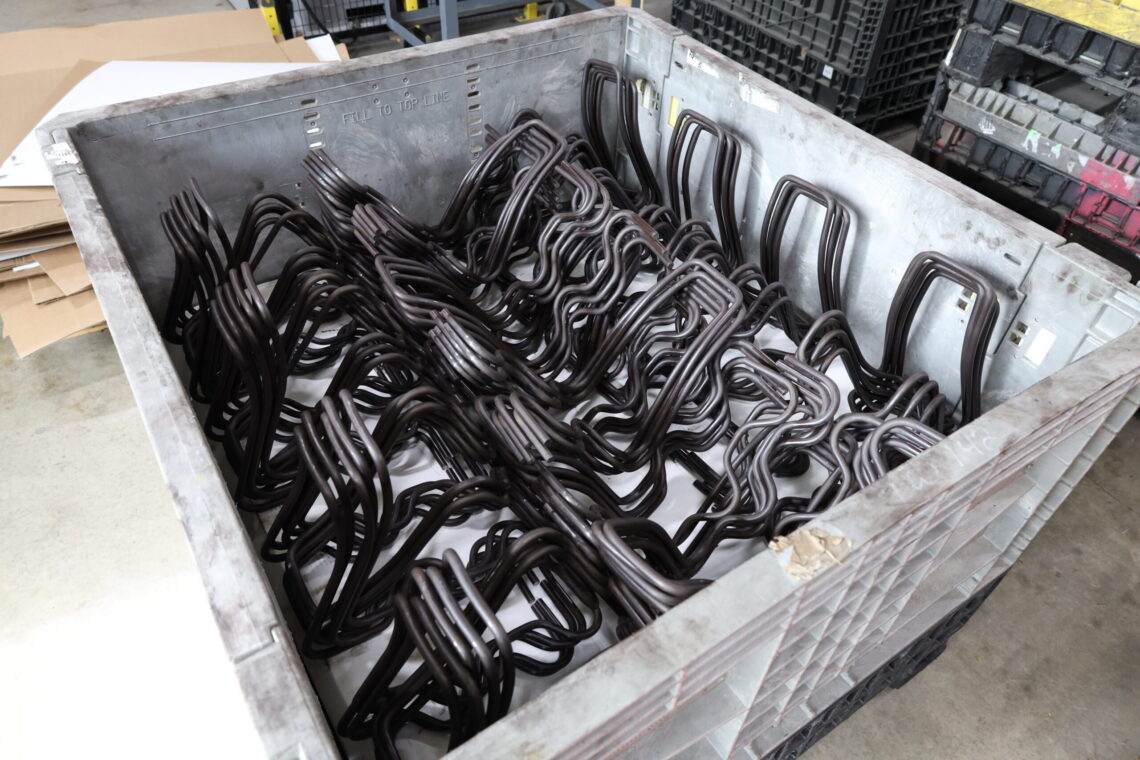
Wire forming is a broad term that describes shaping wire into a specific configuration. Parts used in automotive and other industries need wire that can be bent into many shapes. The art to wire bending is that the wire needs to be bent beyond its yield strength, but within its tensile strength. In other words, the wire needs to be bent to achieve certain angles without breaking or rebounding back to its original shape.
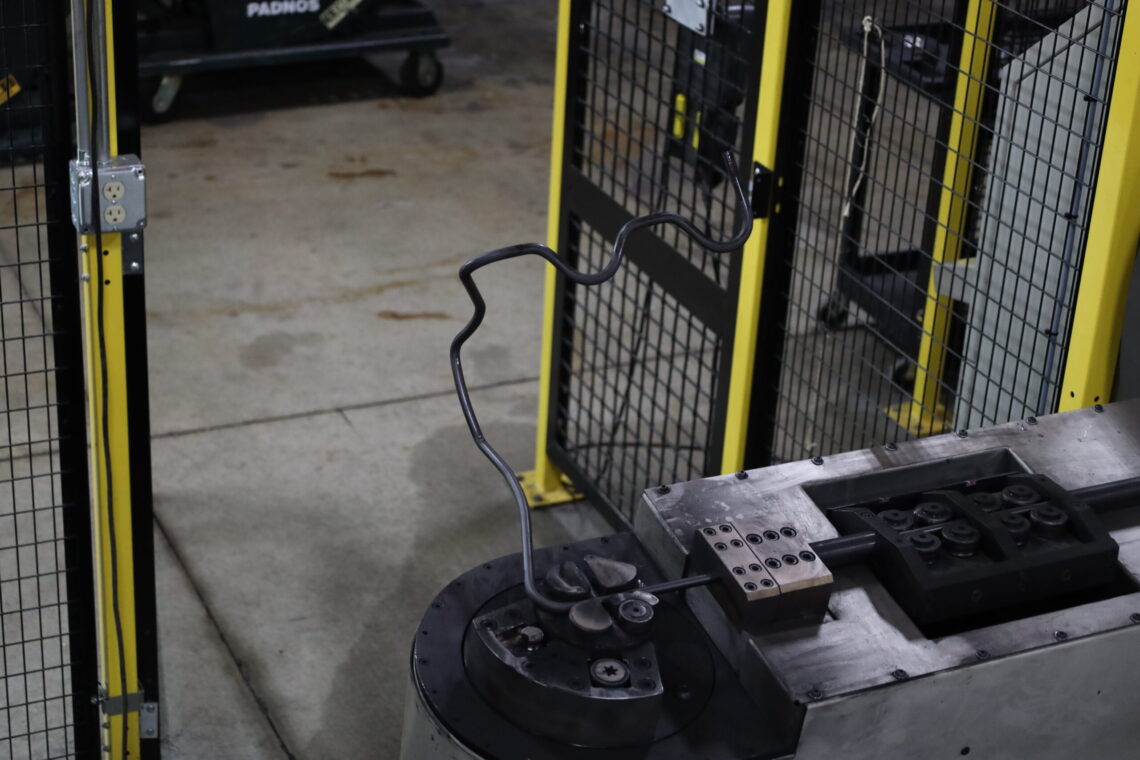
Wire comes in on a large coil or reel. If this process is not done exactly right then the wire will revert to its “coil memory” and curve in all the wrong places. These machines, like the AIM, are referred to as “CNC wire benders” and are the most accurate and productive way to make wire forms. This type of bending allows us to bend a large amount of wire in a short amount of time. These machines require a computer, coil feeder, straighteners, and Servo-driven rollers. First, the computer is programmed to make the part exactly how it needs to be made. Next, the computer sends the specifications to the machine. Then, the wire is pushed through the straightener prior to the shaping and forming. The exact amount of wire is fed into the machine. Finally, it can be bent up, down, left, right, angled, coiled and cut.
Sometimes these complex machines even have their limitations. That is where the robot arm can be programmed to do various secondary operations during the process. This includes repositioning the part to perform additional bends, moving to a secondary die, or even offload the part in a particular orientation. The ever evolving use of robotics has increased their ability to do more in the manufacturing environment at lower costs.
Can we help with your next project?
| Contact Us | Request A Quote |
Related
Manufacturing
03.16
Understanding Four-Slide and Multi-Slide Metal Stamping
Understanding Four-Slide and Multi-Slide Metal Stamping
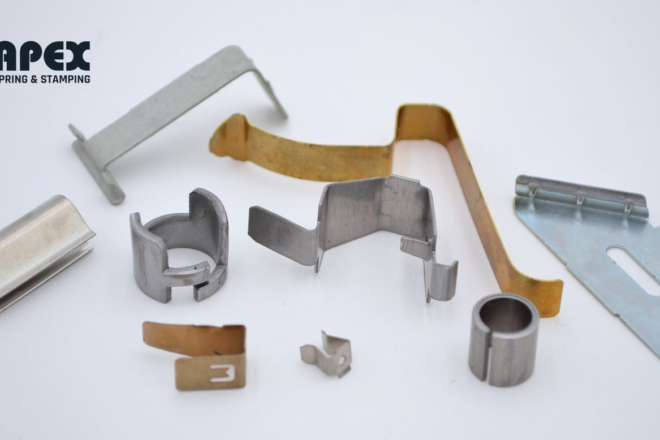
Four-slide and multi-slide metal stamping is widely used for producing complex, precision metal parts, where the material needs to form from multiple directions. These machines are efficient for manufacturing clips, brackets, flat springs, compression limiters, and more.
Miscellaneous
02.12
Apex is Committed to Quality in Assembly
Apex is Committed to Quality in Assembly
Assembly quality control matters — not just while the parts are at our plant, but for every step in the process thereafter. Apex understands this, and therefore ensures that your assemblies meet the highest standards before they reach the next line, or the end customers.
Miscellaneous
01.15
Exploring the Multitude of Spring Applications
Exploring the Multitude of Spring Applications
For purchasing managers, product designers, and manufacturing professionals, understanding where and how springs are used can spark new ideas, uncover cost-saving opportunities, and reveal smarter ways to solve mechanical problems. Let’s explore some of the applications of compression, extension, and torsion springs—and why customization matters more than you might think.