
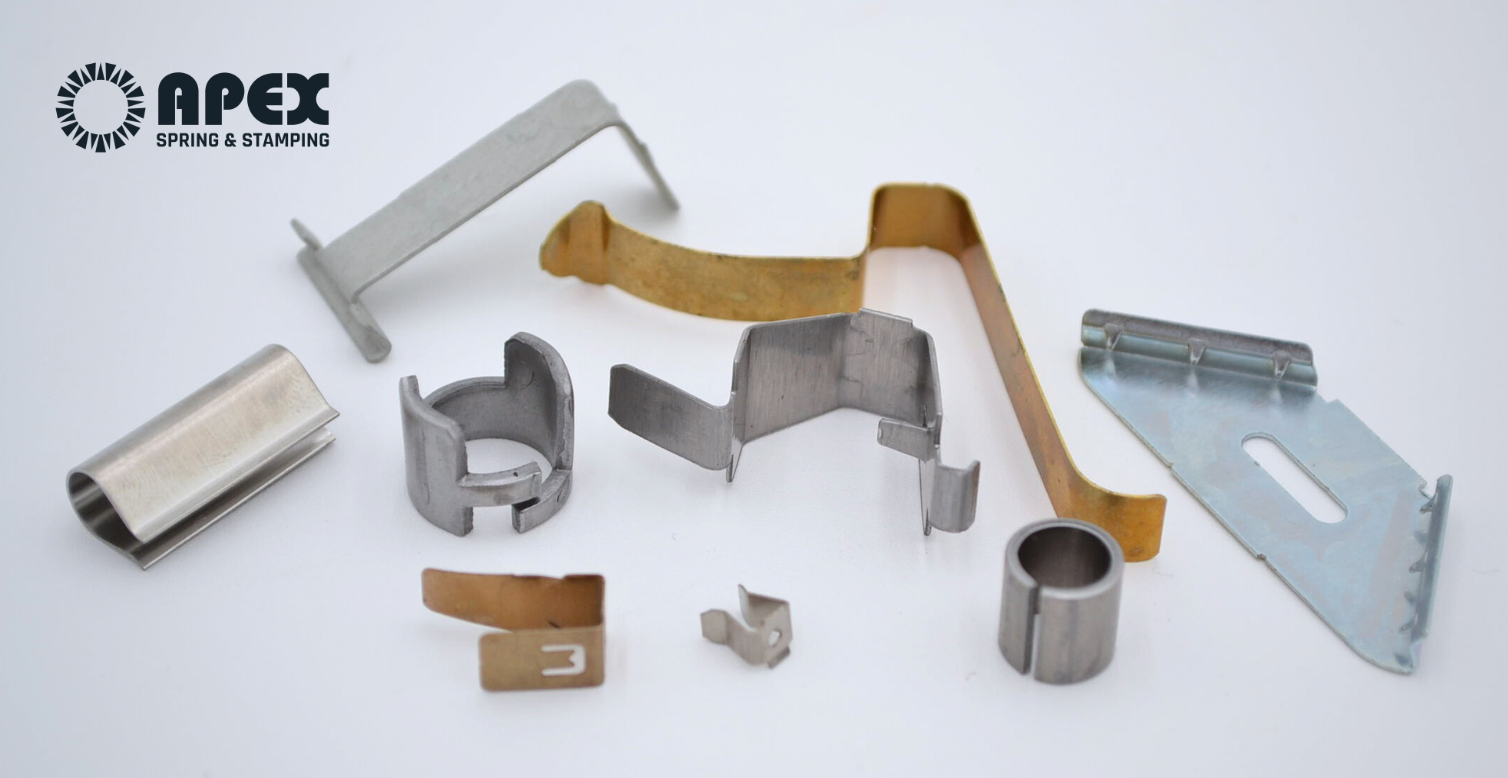
Four-slide and multi-slide metal stamping is widely used for producing complex, precision metal parts, where the material needs to form from multiple directions. These machines are efficient for manufacturing clips, brackets, flat springs, compression limiters, and more.
Metal stamping is one of the most efficient ways to produce high-volume metal parts, but different stamping methods offer different advantages depending on the design of the component.
What Makes Four-Slide and Multi-Slide Machines Different?
Four-slide and multi-slide machines are unique metal stamping systems designed to form parts using tools that approach the material from several directions at once. Instead of relying on a single vertical press stroke like traditional stamping presses, these machines use multiple horizontal slides controlled by cams.
The slides move in a coordinated sequence to perform multiple operations on a strip of metal as it feeds through the machine. This allows the machine to perform several forming and cutting operations within a single cycle.
What are Common Parts Produced Using Four-Slide Machines?
Common parts produced using four-slide and multi-slide machines include:
- Clips
- Brackets
- Retainers
- Electrical contacts
- Flat springs
- Small metal assemblies
Because the machine can manipulate the material from multiple angles, it is particularly well suited for parts that require multiple bends or complex forms.
What are The Advantages of Four-Slide and Multi-Slide Manufacturing?
1. Lower Tooling Costs Compared with Traditional Stamping
Traditional progressive stamping dies can be extremely complex and expensive to build, especially when the part requires several forming operations. Four-slide tooling, however, is often simpler and more modular. This can lead to significantly lower upfront investment.
2. Lower Piece Price Through Efficient Manufacturing
Four-slide and multi-slide machines are also known for their competitive piece pricing because they can perform several operations in one continuous process. This reduces the need for additional manufacturing steps.
Combining cutting, bending, and forming operations reduces secondary operations and results in higher production speeds and reduced handling. All of these things lower the cost per piece, which is especially valuable for high-volume components.
3. Ability to Manufacture Complex Parts
Another major advantage of four-slide and multi-slide manufacturing is the ability to create parts with complex geometries.
Because the machine forms material from multiple directions, it can produce shapes that would require several operations on a conventional press. This includes parts with multiple bends, tight radii, interlocking features, and complex formed shapes. Combining these steps helps simplify manufacturing while maintaining tight tolerances and consistent part quality.
4. Reduced Material Waste
Material costs are often one of the largest contributors to the total cost of a metal component. Four-slide manufacturing can help reduce waste and improve material utilization. This is because these machines typically feed from coil stock that is slit close to the final width of the part, minimizing scrap.
For components made from stainless steel, copper alloys, or specialty materials, these savings can be significant over large production runs.
5. Faster Production and Shorter Lead Times
Four-slide and multi-slide machines are designed for high-speed, continuous production. Once tooling is set up, the machines can produce large quantities of parts quickly and consistently. This is becuase of the continuous feeding from coil stock, the high-speed forming cycles, and the reduced need for multiple production steps
6. Greater Design Flexibility
Another benefit that engineers often appreciate is the flexibility that four-slide tooling provides during product development. Unlike large progressive dies that may require major redesign if a part changes, slide-forming tooling can often be adjusted more easily.
This flexibility allows for faster design iterations, easier adjustments to bend angles or features, and lower costs when modifications are required.
When is Four-Slide or Multi-Slide Manufacturing the Best Choice?
While slide-forming technology offers many advantages, it is not the best solution for every part. It is most effective for components that meet certain criteria.
Slide-forming machines are particularly well-suited for:
- Small-to-medium sized metal components
- Parts with multiple bends or complex forms
- Medium to high production volumes
- Applications where minimizing tooling cost is important
These processes are commonly used in industries such as automotive, electronics, appliances, industrial equipment, and more.
Can Apex Manufacture Metal Stamping products in Multi-Slide Machines?
Yes! Apex is equipped with a full fleet of slide-forming machines to serve the unique needs of our customers. We appreciate that metal strip forming can provide a powerful combination of cost efficiency, production speed, and design flexibility for our customers.
Choosing the right manufacturing process can make a significant difference in both cost and performance. We can help you from design to production. Contact us today to start the conversation!
| Contact Us | Request A Quote |
Related

Manufacturing
10.08
5 Questions to Ask Before Choosing a Spring Manufacturer
5 Questions to Ask Before Choosing a Spring Manufacturer
Springs can have a significant impact on product performance, reliability, assembly, and ultimately your customer experience. Therefore, choosing the right manufacturing partner means finding a supplier that understands not only the technical aspects of the product, but also how the spring needs to perform in your application.

Manufacturing
09.10
Your Guide to Spring Material Selection
Your Guide to Spring Material Selection
Successful spring material selection begins with understanding the environment in which the spring will operate and the performance expectations it must meet. While music wire remains a cost-effective solution for many applications, stainless steel excels in corrosive environments, and chrome silicon delivers superior performance in high-stress applications. If you’re unsure which material is right for your application, the engineering team at Apex Spring & Stamping can help identify the best solution for your specific requirements.
Miscellaneous
08.20
FAQs About Custom Spring Quotes
FAQs About Custom Spring Quotes
Whether you have a production-ready drawing, an existing spring that needs to be reverse engineered or an early-stage design that still needs engineering, Apex Spring & Stamping can help you move from concept toward production.